Follow Us :

Plant Tissue Culture Market Report: Size, Share, Trends, and Forecast (2024-2033) – By Crop Type, Stage, and End-users
- Report ID: STAR5225
- Industry: Agriculture & Agri Products
- Published Date: 13-06-2025
- NUMBER OF PAGES: 233
-
FORMAT:



Plant Tissue Culture Market Research: 2033
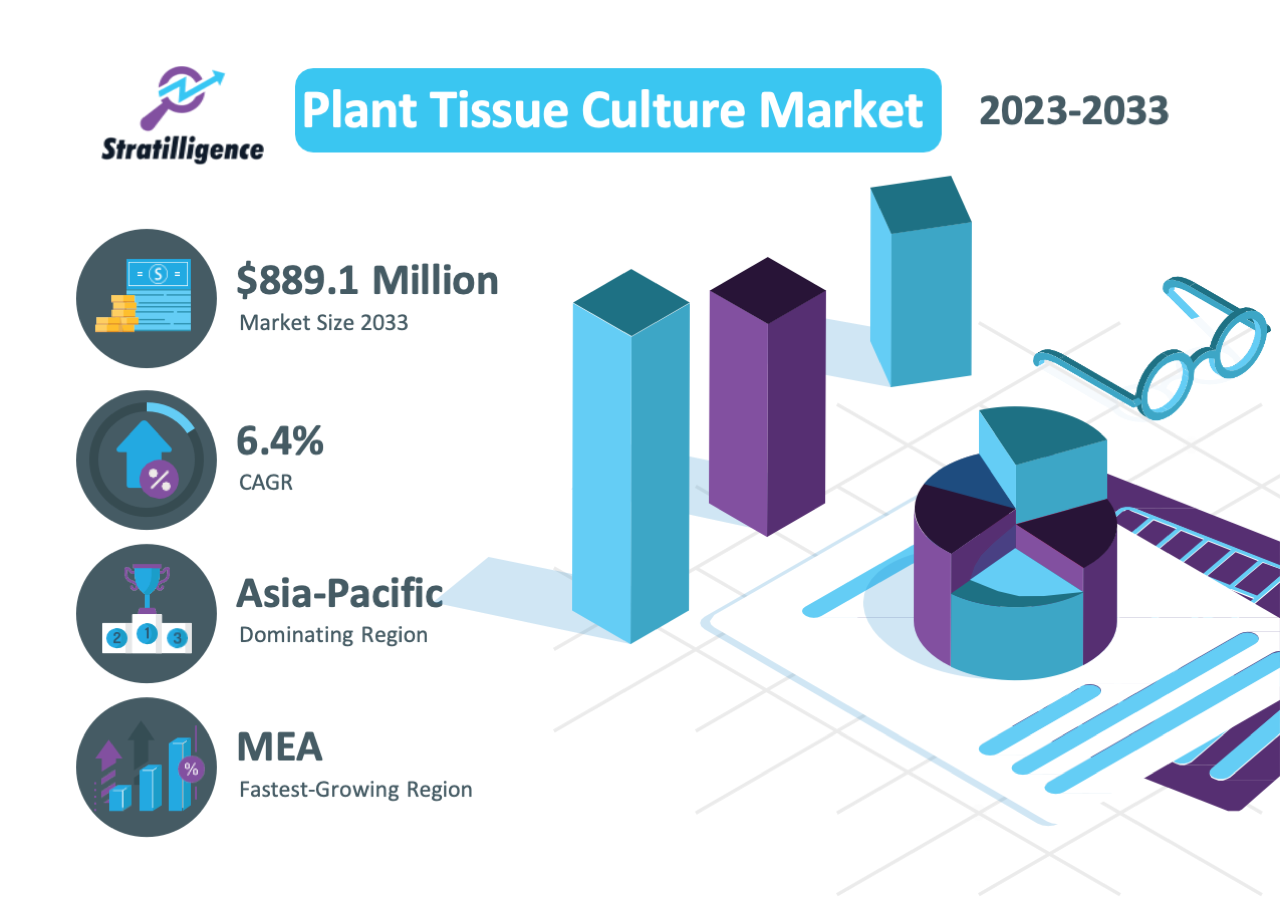
The global plant tissue culture market size was valued at $486.3 million in 2023 and is projected to reach $889.1 million by 2033, growing at a CAGR of 6.4% from 2024 to 2033. Plant tissue culture is a sophisticated set of techniques that allows for the growth and maintenance of plant cells, tissues, or organs in controlled environments using a nutrient culture medium. This innovative method facilitates the rapid propagation of plants and the preservation of genetic material, making it a cornerstone of modern agricultural and horticultural practices. Through various techniques, such as micropropagation and somatic embryogenesis, plant tissue culture enables the production of numerous genetically identical plants from a single tissue sample, significantly enhancing the efficiency of plant production.
The uses of plant tissue culture are varied and impactful across multiple sectors. In agriculture, it enables the rapid propagation of crops, enhancing food security by ensuring a consistent supply of high-quality plants. In horticulture, it is pivotal for producing ornamental plants and flowers, catering to the landscaping market. Forestry also benefits from tissue culture through the propagation of tree species for reforestation efforts. Moreover, the pharmaceutical industry leverages these techniques for the development of secondary metabolites that can lead to new drug discoveries. Additionally, plant tissue culture plays a critical role in research, facilitating studies on plant genetics, development, and responses to environmental stresses.
The importance of the plant tissue culture market is underscored by its contributions to agricultural productivity and sustainability. By enabling the mass production of disease-free plants, tissue culture techniques enhance crop health and yield. Furthermore, the genetic uniformity of cultured plants ensures consistency in quality, which is vital for commercial farming. The preservation of endangered plant species through tissue culture techniques also contributes to the conservation of biodiversity and genetic resources. As the agricultural landscape continues to evolve, the market’s significance in developing innovative crop varieties with enhanced traits becomes increasingly apparent.
The plant tissue culture market is experiencing significant growth driven by various innovative techniques and advancements in plant biotechnology. Micropropagation, a core technique within this field, allows for the rapid multiplication of plant material in a controlled environment. This process is particularly vital for producing large quantities of genetically uniform planting material, which is essential for commercial agriculture and horticulture. By employing in vitro culture methods, growers can produce disease-free plant production systems that enhance crop yield and quality while minimizing the risk of pathogens affecting plant health
One prominent application of tissue culture is banana tissue culture, which is crucial for the propagation of this high-demand crop. Bananas are susceptible to various diseases, such as the Fusarium wilt, making traditional propagation methods insufficient for maintaining healthy plantations. Through tissue culture, producers can generate disease-free banana plants that ensure consistent yield and quality. This method not only improves the economic viability of banana farming but also contributes to food security in regions heavily reliant on this staple crop
Furthermore, in vitro culture techniques in floriculture also support the cultivation of disease-free plants, which is crucial for maintaining the health and aesthetic appeal of floral arrangements. In floriculture, tissue culture techniques have revolutionized the production of ornamental plants. The use of somatic embryogenesis, a process that allows for the regeneration of plants from somatic cells, has enabled the development of new varieties with desirable traits. This method facilitates the quick propagation of unique floral species, catering to the evolving preferences of consumers while ensuring high standards of plant quality.
Murashige and Skoog (MS) media play a vital role in the success of tissue culture applications. This nutrient-rich medium provides the essential nutrients, vitamins, and hormones required for the growth and development of plant tissues in vitro. The formulation of MS media is tailored to meet the specific needs of various plant species, promoting efficient micropropagation and maximizing the success rate of plant regeneration processes. The versatility of MS media has made it a standard in laboratories worldwide, further driving advancements in plant tissue culture practices
The focus on genetically uniform planting material through tissue culture also addresses the challenges faced by conventional agricultural practices. As climate change and environmental pressures continue to impact crop production, the need for resilient plant varieties is more pressing than ever. Tissue culture techniques enable breeders to produce uniform plants that can withstand adverse conditions, thus ensuring sustainable agricultural practices. The capacity to generate large numbers of genetically identical plants also aids in research and development efforts aimed at enhancing crop traits
The demand for commercial plant micropropagation is on the rise as growers seek efficient methods to meet the increasing food demands of a growing global population. Commercial enterprises are investing in tissue culture facilities to leverage its benefits, including reduced production times and improved plant quality. As the market expands, new players are entering the field, leading to innovations that further enhance tissue culture techniques and their applications across various agricultural sectors
Plant biotechnology advancements are also playing a crucial role in shaping the future of the tissue culture market. With ongoing research focused on genetic engineering and molecular biology, scientists are exploring new methods to improve plant characteristics and resilience. These advancements promise to enhance the efficacy of tissue culture processes, making them more adaptable to the needs of modern agriculture
Moreover, the integration of tissue culture with precision agriculture technologies is set to revolutionize the way crops are grown and managed. By utilizing data analytics, remote sensing, and automated systems, growers can optimize tissue culture practices and monitor plant health more effectively. This synergy between biotechnology and technology will likely lead to greater efficiencies in plant production, ultimately benefiting the industry and consumers alike
In conclusion, the plant tissue culture market is poised for continued growth as innovations in micropropagation, disease management, and plant biotechnology drive the industry forward. Techniques like banana tissue culture and somatic embryogenesis are essential for producing high-quality, disease-free plants that meet the demands of commercial agriculture and floriculture. The evolution of Murashige and Skoog media and the emphasis on genetically uniform planting material further underline the significance of tissue culture in modern farming practices. As the market evolves, ongoing research and technological advancements will be critical in addressing global agricultural challenges and enhancing food security
Coverage of the report
| Scope | Details |
|---|---|
| Market Size Estimation | Quantitative Insights: Market size and projections from 2019 to 2033, Market Size Units: USD Billion |
| Market Dynamics | Analysis of drivers, restraints, and trends shaping the market |
| Industry Analysis | Value chain analysis, Profit margin analysis, and Industry Overview |
| Segmentation | By Crop Type, (Banana Plants, Floriculture Plants, Wood Producing Plants, Fruit Plants, Vegetable Plants, Ornamental Plants, Aquatic Plants and Others), By Stage, (Explant Preparation And Inoculation, Multiplication And Hardening), By End-Users, (Agriculture, Research, Gardening & Decoration And Forestry & Botanical Garden) |
| Region Insights | Detailed analysis for North America, Europe, Asia-Pacific, Latin America, and MEA with key countries in each region |
| Competitive Analysis | Company profiles, Ranking/Market share analysis, Competitive structure, Product differentiation |
| Customer Landscape Analysis | In-depth understanding of the customer industry, preferences, and buying patterns |
| Supplier Analysis | Comprehensive analysis of suppliers |
Key Benefits for Stakeholders
This comprehensive report provides stakeholders with in-depth qualitative and quantitative analyses, focusing on the global plant tissue culture market from 2023 to 2033.
Key benefits include:
- Insightful Plant Tissue Culture Market Forecast: The report offers detailed projections, covering various segments, current Plant Tissue Culture market trends, and dynamics.
- Competitive Analysis with Porter’s Five Forces: A thorough examination of the bargaining power of buyers and suppliers, the threat of new entrants, competitive rivalry, and substitute products.
- Comprehensive Plant Tissue Culture Market Outlook Overview: Gain access to crucial information about key market drivers, restraints, and opportunities.
- Regional and Country-Level Mapping: The report maps out major regions and countries based on their revenue contribution to the global plant tissue culture market opportunity.
- Market Player Positioning: The competitive landscape analysis provides a clear understanding of the current market positioning of key players in the global plant tissue culture industry.
Key Market Drivers and Growth Factors in the Plant Tissue Culture Market
One of the primary drivers of the plant tissue culture market is the increasing demand for high-quality and disease-resistant crops. As global populations continue to grow, there is a pressing need to enhance food production while ensuring that crops are resilient to diseases and pests. Plant tissue culture techniques enable the rapid propagation of superior plant varieties that meet these demands, thus contributing to food security and sustainability. This heightened focus on agricultural productivity has led many farmers and agricultural organizations to adopt tissue culture methods, driving market growth.
Another significant factor contributing to the growth of the plant tissue culture market is the rising awareness of sustainable agricultural practices. With growing concerns about environmental sustainability and the negative impacts of traditional farming methods, there is a shift toward more sustainable approaches that minimize the use of chemical fertilizers and pesticides. Plant tissue culture supports sustainable agriculture by producing disease-free plants that require fewer chemical treatments, thus promoting environmentally friendly farming practices. This trend is increasingly influencing agricultural policies and practices worldwide, further propelling the market.
Technological advancements in tissue culture techniques also play a crucial role in driving market growth. Innovations such as automated tissue culture systems, advanced nutrient media formulations, and improved methods for genetic transformation are enhancing the efficiency and effectiveness of plant tissue culture processes. These technological developments not only streamline production but also increase the scalability of tissue culture operations, making it accessible to a broader range of agricultural and horticultural businesses. As technology continues to evolve, it is expected to attract more investments in the plant tissue culture sector, contributing to further market expansion.
The growing interest in biotechnology and genetic engineering is another important growth factor for the plant tissue culture market. As researchers and agriculturalists seek to develop crops with specific traits, such as drought resistance, enhanced nutritional value, or improved yield, tissue culture provides a reliable platform for genetic modification and plant breeding. The ability to manipulate plant genetics through tissue culture techniques is driving research and development activities, leading to the introduction of novel crop varieties that cater to changing consumer preferences and environmental conditions.
Lastly, the increasing focus on conservation and biodiversity preservation is promoting the adoption of plant tissue culture techniques. As habitats are threatened and plant species face extinction, tissue culture provides an effective means of conserving endangered plants through techniques such as cryopreservation and ex-situ conservation. By enabling the preservation of genetic material from rare and endangered species, tissue culture supports biodiversity initiatives and restoration projects. This focus on conservation not only enhances the ecological balance but also provides opportunities for commercial applications, thereby driving growth in the plant tissue culture market.
Increasing demand for high-quality and disease-resistant crops drives the plant tissue culture market
The demand for high-quality, disease-resistant crops is on the rise as global food security challenges intensify alongside population growth. Farmers and agricultural producers seek crops that not only yield abundantly but also demonstrate resilience against pests, pathogens, and environmental stresses. Disease-resistant crops help reduce dependency on chemical pesticides, which are costly and can harm the environment. Plant tissue culture plays a pivotal role here by enabling the mass production of genetically uniform, disease-free plants with desirable traits. This capability aligns with the increasing focus on sustainable agriculture, as healthy, resilient plants contribute to improved productivity, lower production costs, and more environmentally friendly farming practices.
Challenges and Restraints in the Plant Tissue Culture Market
The plant tissue culture market faces several challenges and restraints that can hinder its growth. One major issue is the high initial investment required for setting up tissue culture laboratories and procuring advanced equipment, making it less accessible for smaller producers. Additionally, tissue culture processes demand skilled technicians, and labor shortages or a lack of expertise can limit production capabilities. Contamination risk is another significant challenge, as even minor contamination can result in the loss of entire batches, leading to increased operational costs. Furthermore, the long growth cycles for certain plants and limited public awareness of the benefits of tissue culture can restrict market expansion, particularly in developing regions.
Plant Tissue Culture Market Segmentation
The plant tissue culture market is bifurcated based on crop type, stage, and end user. By crop type, the market is categorized into banana plants, floriculture plants, wood-producing plants, fruit plants, vegetable plants, ornamental plants, aquatic plants, and others. The floriculture plants segment was the major revenue contributor in 2023. This is attributed to the growth of the cosmetics & personal care industry, coupled with increasing awareness regarding the medicinal properties of flowers.
By stage, the market is divided into explant preparation and inoculation, multiplication, and hardening. The multiplication segment dominated the market in 2023. This is attributed to the increasing adoption of plant tissue culture, especially in developing countries of Asia-Pacific and Latin America.
By end user, it is divided into agriculture, research, gardening & decoration, and forestry & botanical gardens. The agriculture segment has emerged as the dominant end-use sector in the plant tissue culture market. This dominance is largely due to the growing need for high-quality, high-yield crops that can withstand various environmental and biological stresses. Farmers and agribusinesses leverage tissue culture techniques to rapidly propagate superior plant varieties that are disease-resistant, genetically uniform, and capable of thriving in diverse climates. Additionally, tissue culture supports the production of crops with enhanced nutritional profiles, further aligning with global food security goals.
As agriculture continues to evolve toward more sustainable and efficient practices, the demand for tissue culture applications within this sector is expected to grow, reinforcing its lead in the market.
Regional Analysis of the Global Plant Tissue Culture Market
Region-wise, the plant tissue culture market analysis is conducted across North America (the U.S. and Canada), Europe (UK, France, Germany, Italy, and Rest of Europe), Asia-Pacific (China, Japan, India, South Korea, and Rest of Asia-Pacific), and Latin America (Brazil, Mexico, Argentina, and Rest of Latin America), and MEA (Saudi Arabia, UAE, Kenya, South Africa, and Rest of Middle East & Africa).
Competition Analysis
The major players profiled in the plant tissue culture market report, having significant market share, include 3 Rivers Biotech, Alpha Laboratories, AgriForest Bio-Technologies, AgriStarts, Booms Pharm, Caisson Laboratories, Inc., Dark Heart Nursery, DP-Deroose Plants, Himedia Laboratories, and IribovSBW.
Key Developments/ Strategies in Plant Tissue Culture Market
Major companies in the plant tissue culture market have adopted product launch, partnership, business expansion, and acquisition as their key developmental strategies to offer better products and services to customers in the market, which is contributing to plant tissue culture growth.
- In 2024, NXT Bioscience acquired Lowes TC, integrating advanced tissue culture technologies such as the AX and TC+ platforms. These innovations automate production, allowing efficient, large-scale propagation of virus-free plants while reducing labor costs. This strategic acquisition strengthens NXT Bioscience’s ability to meet industry needs, especially in markets with higher labor costs, and positions the company as a leader in sustainable agriculture and horticulture solutions.
- In 2023, NuPlant, an Australian biotechnology company, launched a notable patent-backed technology called the SmartClone automated tissue culture system. This system leverages precision robotics to streamline plant tissue culture propagation, increasing consistency and reducing labor costs for a variety of species.
To explore the complete range of topics and critical insights our report offers, including comprehensive chapter names and pivotal sections, we invite you to submit a request for a detailed sample. Your inquiry will help gain an in-depth perspective on the report’s valuable content.
Chapter 1: Executive Summary
-
- Overview of the report
- Key findings and insights
- Market Entry Strategy (Add-on)
- Strategic Recommendation
Chapter 2: Introduction
Chapter 3: Market Overview
Chapter 4: Plant Tissue Culture Market, by Crop Type
Chapter 5: Plant Tissue Culture Market, by Stage
Chapter 6: Plant Tissue Culture Market, by End-users
Chapter 7: Plant Tissue Culture Market, by Region
Chapter 8: Plant Tissue Culture Market, by Country
Chapter 9: Customer Industry Analysis (Add-on)
-
- Price Sensitivity Analysis
- Purchase Criteria Analysis
- XX
- XX
- XX
- XX
- XX
- XX
- XX
- XX
- XX
Chapter 10: Supplier Analysis (Add-on)
-
- Industry Structure Analysis
- Switching Cost Analysis
- XX
- XX
- XX
- XX
- XX
Chapter 11: Competitive Landscape
Chapter 12: Company Profiles